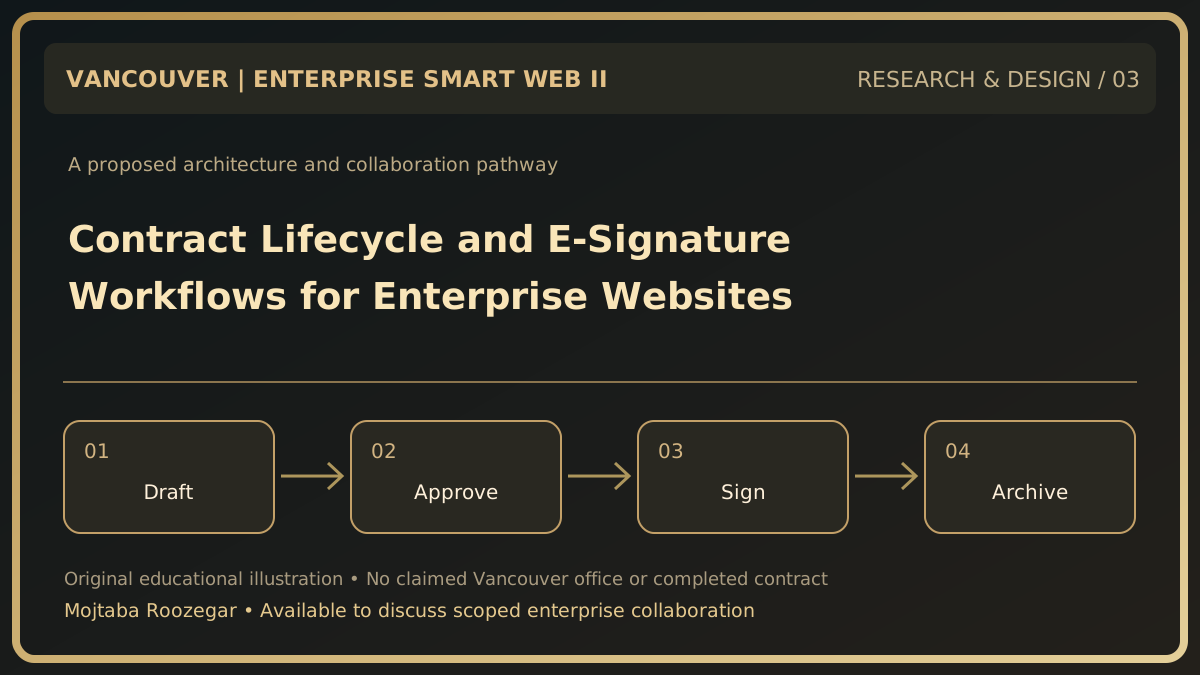
Contracts are business records, not just PDFs
I am open to collaborating with Vancouver enterprise legal operations and IT teams on web-based contract workflows. Large organizations may need templates, negotiations, approval thresholds, signature stages and renewal obligations across different departments. A file upload page alone does not guarantee an enforceable or well-governed agreement. The right system makes the authoritative version and approved signatories clear while respecting legal advice and the organization's records policies.
Represent approvals and document versions
Draft, internal review, external negotiation, approved for signature, executed, amended and archived should have explicit transition rules. Different agreement types can require finance, legal, security or business-owner approval. Maintain a version history and protect against one reviewer signing an obsolete draft. Clause libraries may help standardize language, but each applicable term must be reviewed by authorized staff. A commercial obligation should not be silently altered because a template was updated after execution.
Integrate signatures under the right rules
Electronic signatures and recordkeeping have jurisdiction-specific requirements. An appropriate provider or method may need identity assurance, consent, tamper evidence and audit records. Technical integration should protect signing URLs and callbacks from replay, verify event authenticity and reconcile final signed files. Only approved contracting entities and signatories should have authority to execute an agreement.
Create an operational obligation view
After signing, users may need renewal alerts, notice deadlines, insurance documents, data-protection schedules or service-level obligations. These should be derived from reviewed contract metadata rather than guessed by AI. A language model may propose a summary with citations, but a designated reviewer must validate commercial and legal effects. Support secure search, retention holds and permissions separating legal counsel, business owners and external partners. Avoid placing confidential contract text into general analytics logs.
Scoped invitation
An initial prototype could demonstrate one synthetic master services agreement, dual internal approval, a test-signing sequence and a renewal reminder. Evaluate version locking, audit completeness and access isolation. I would welcome discussion with Vancouver corporate technology teams about the user experience and architecture, subject to legal and privacy review.
Editorial note: Prepared by Mojtaba Roozegar as a proposed Vancouver enterprise collaboration.