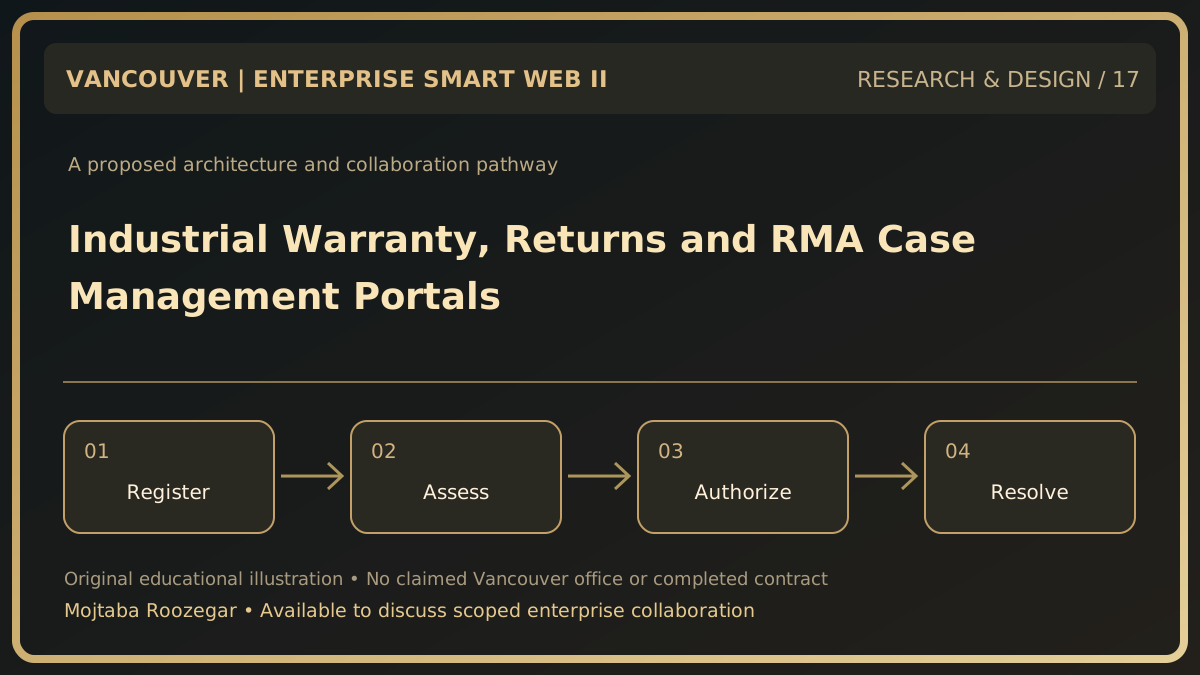
Returns need more than a support ticket
I am interested in collaborating with Vancouver manufacturers, equipment suppliers and business service organizations on digital warranty and return merchandise authorization portals. A customer may request repair, replacement, credit or inspection, each governed by different product and contract rules. A simple refund button cannot determine eligibility. The web application should organize asset history, sales evidence, serial ranges and approved dispositions so teams reach reviewable decisions without promising automatic legal conclusions.
Model eligibility and claim states precisely
A claim can progress from submitted to evidence requested, eligibility assessed, authorization issued, item received, technical inspection, decision and final resolution. Preserve the distinction between an initial claim and an accepted warranty obligation. Product-specific warranty terms, purchase date, authorized seller, component exclusions and repair history may affect the outcome. Use effective-dated rules, human review and an appeal route where necessary. A disputed case should retain all key documents and approval history.
Integrate physical and financial operations
A return identifier should link shipping labels, receiving events, inspection outcomes and inventory disposition. Merchandise arriving in a warehouse is not automatically approved for credit. Financial adjustments belong in an authoritative commercial system and should be reconciled to the approved case. Duplicate carrier scans and retried customer requests need idempotency controls. Preserve traceability when a replaced part receives a new serial number and when a technician documents findings.
Design transparent customer communication
The customer should see a clear, current status and what information is required next, without exposing internal disputes or other customers' commercial details. Uploads need safe storage and file validation. Different countries or product categories may introduce consumer protection and contract questions requiring legal review.
A sensible prototype
A small pilot could implement two fictional warranty policies, three submitted claims, a simulated inspection result and one rejected claim requiring appeal. Test lifecycle guards, visibility across organizations and exact versioned terms. I welcome discussion with Vancouver enterprise after-sales teams about the web architecture and user experience, with actual warranty obligations decided by the partner.