A useful system does not predict with certainty
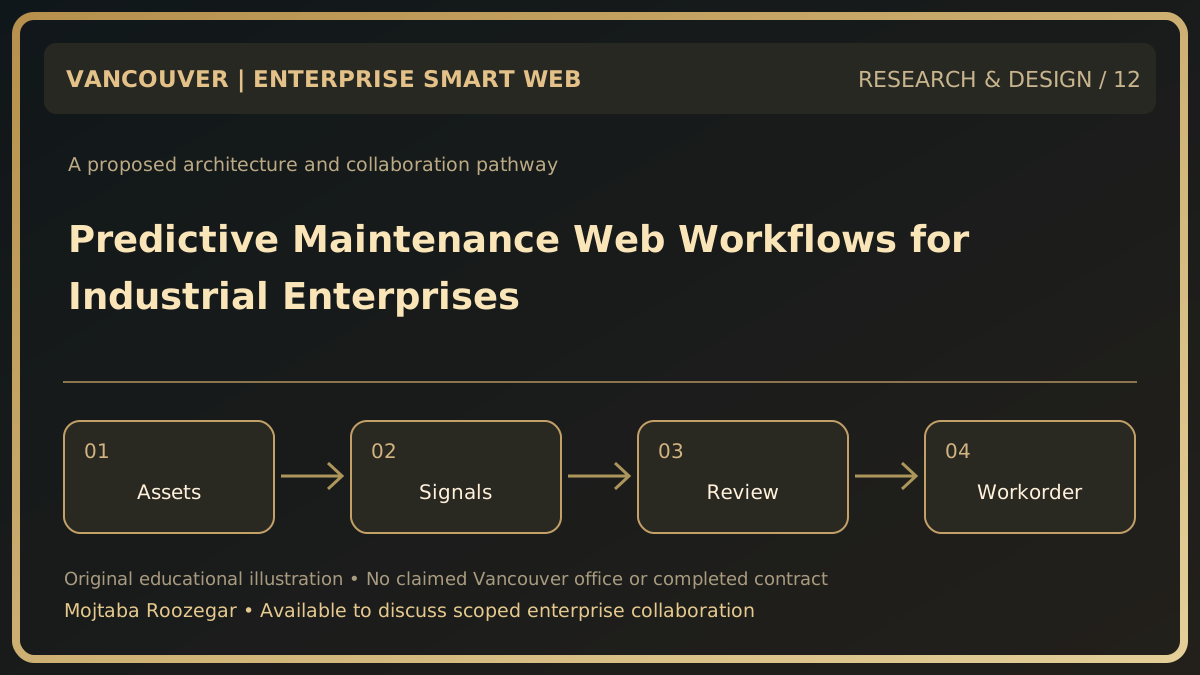
I am interested in collaborating with Vancouver industrial groups on web systems that connect equipment history, sensor information and maintenance planning. Predictive maintenance claims need careful definition because not every anomaly precedes failure and some failures have no recognizable precursor. A website should support qualified personnel with evidence rather than declare that an AI model will prevent all downtime. The objective is better decisions within a real maintenance process.
Collect consistent maintenance histories
Equipment records may include asset identifier, age, operating conditions, service events, replacement components, symptoms and failure outcomes. Missing or inconsistent records can invalidate model training. Establish the meaning of an incident and distinguish planned maintenance from unplanned downtime. Sensor sampling rates and calibration histories matter; a changed sensor can look like a changed machine. Never present simulated events as industrial field data.
Build explainable intervention logic
A dashboard can group current condition indicators, anomaly confidence, supporting measurements and related service records. Alert thresholds should be configurable only by authorized users and changes should be audited. Include a clear acknowledgement and escalation path. High-risk physical decisions remain with authorized engineering staff following safety processes. If the model's confidence or source freshness is inadequate, showing insufficient evidence is preferable to a confident but incorrect instruction.
Evaluate performance before expanding scope
Use historical data only with permission and define labels carefully. Measure false alarms, missed relevant events and time between warning and verified outcome. Review performance by asset type and operating regime; an average score can conceal poor results on critical equipment. A pilot can begin with synthetic event streams to validate the web interface and access controls, then use approved historical cases under supervision.
An invitation for a bounded pilot
A suitable engagement could produce a maintenance case-management portal with an anomaly explanation panel, review workflow and documented benchmark. I am ready to discuss requirements and web delivery with Vancouver industrial stakeholders. This is a proposal for possible collaboration, not an assertion of a certified predictive model, a deployed plant system or an established customer relationship.
Author: Mojtaba Roozegar. Scope, lawful operating arrangements and commercial terms would be agreed with a prospective Vancouver organization; case descriptions are illustrative.