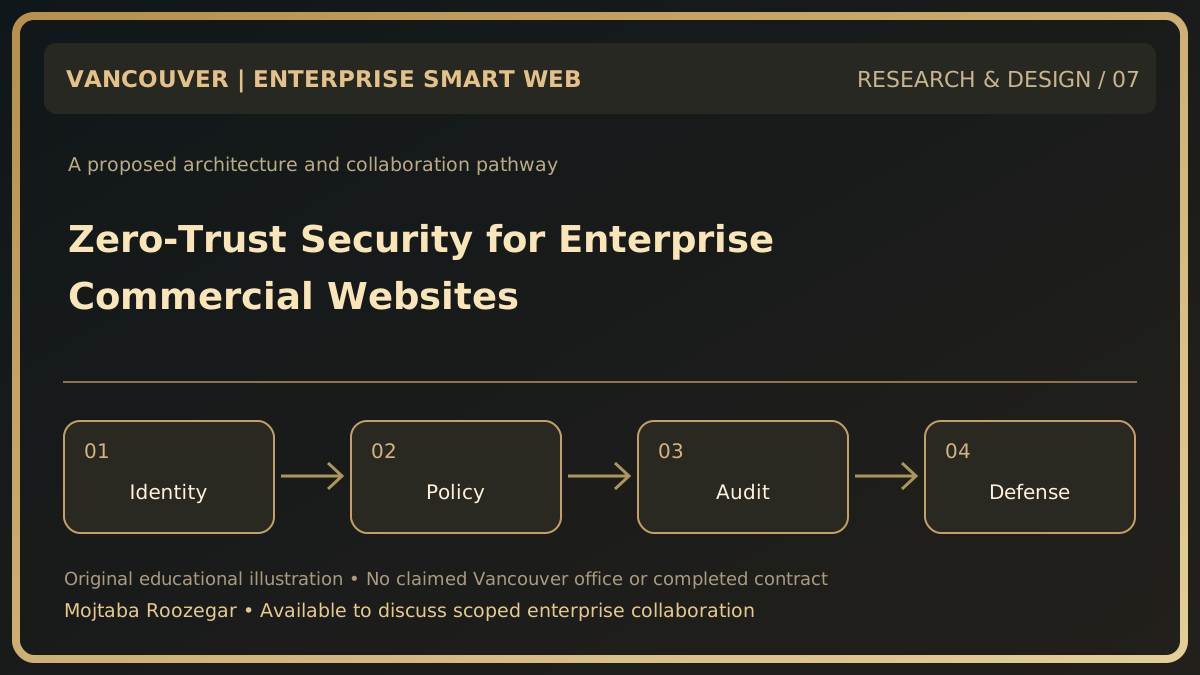
Security belongs in the original design
Enterprise portals serving procurement, employee records or industrial analytics can expose sensitive information if permissions are assumed rather than checked. I am open to collaborating with Vancouver organizations on designs that treat identity and authorization as first-class architecture. Zero trust is not a particular product badge; it is a discipline of verifying each relevant access request under a defined policy. The appropriate controls depend on user populations, risk, assets and approved enterprise systems.
Separate identity and entitlement
Enterprise single sign-on can authenticate a user through a trusted identity provider, but the application must still decide which records and operations that user may access. Model tenant membership, role, data classification and transaction state. A supplier who can upload a quotation should not automatically see competing suppliers' bids. Deny unauthorized object IDs even when the requester knows a valid URL. Log privileged changes and retain an auditable explanation of policy outcomes without exposing secret content.
Protect sessions, interfaces and integrations
Use secure session handling and a documented approach to token expiry and revocation. For browser-based mutations, preserve appropriate CSRF defenses. External callbacks and B2B API connections need authenticated source verification, replay protection and rate limits. Store credentials outside source control, rotate them with operational procedures and redact them from incident logs. A user-friendly dashboard is not permission to bypass production security gates for demonstration purposes.
Test abuse cases, not only successful login
Prepare a matrix including anonymous access, a valid user in the wrong tenant, disabled accounts, conflicting data ownership, forged request bodies and concurrent privilege changes. Include object-level access checks in automated tests and carefully review file upload paths. Security review should examine the actual deployed proxy, application and storage configuration. Generic vulnerability scans support this work but cannot establish authorization correctness on their own.
Invitation to collaborate
A suitable initial engagement might produce a threat model, resource-level authorization matrix, sample policy implementation and documented abuse-case tests for one workflow. I would work alongside the organization's security and IT owners rather than making unsupported certification claims.
Author: Mojtaba Roozegar. This is a professional invitation for Vancouver collaboration, with hypothetical design examples rather than verified engagements or business registrations.