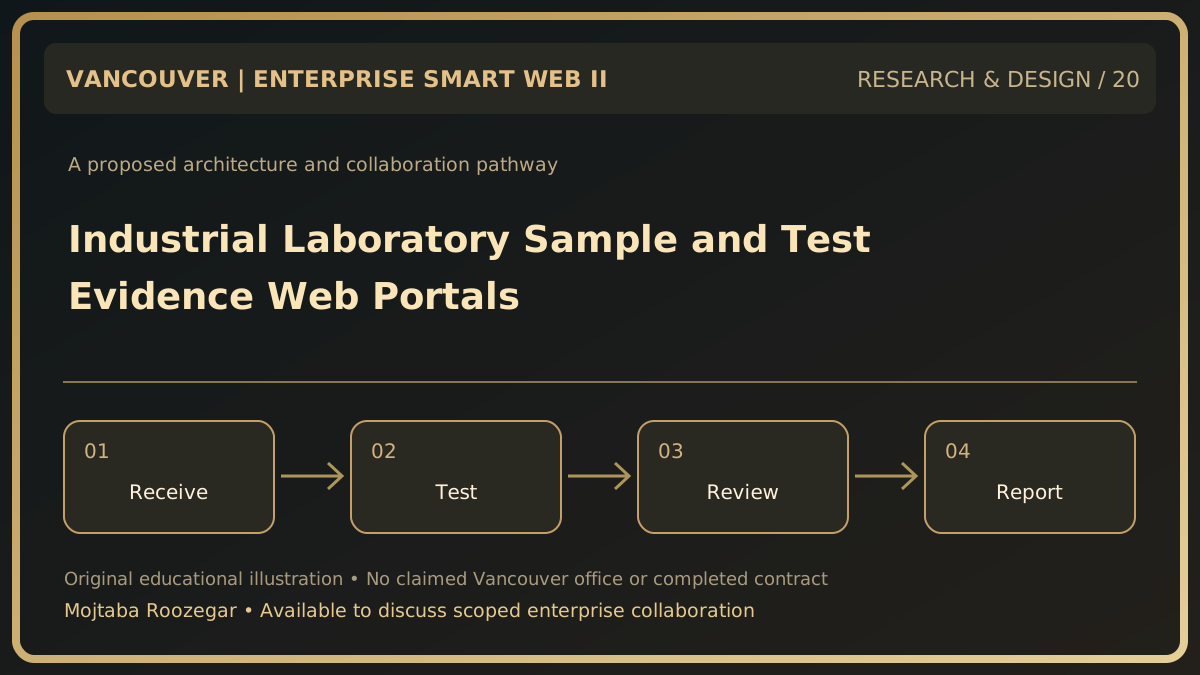
06 / THE JOURNAL

Notes & Journal.

Essays, reflections and new perspectives.

Original photo collection · New perspectives

Agricultural research and fieldwork
Architecture and development portrait

Twelve new research-minded notes

Original educational essays with practical reasoning and explicit limitations

Research note

Gross margin is not the same as business profit

A crop budget often begins with expected sales minus variable production costs. The resulting gross margin is useful for comparing alternatives under similar assumptions, but it does not include every cost of running an agricultural enterprise.

Land rent, depreciation, financing, unpaid family labor, and shared overhead can change the financial picture. A strong analysis states which costs are included and why. Before accepting a ranking of crops, verify that the comparison uses the same time horizon and accounting boundary. Otherwise, apparently precise figures can support a misleading recommendation.

Research note

Water productivity needs the right denominator

When irrigation water is scarce, a farmer may compare kilograms of product or net economic contribution per cubic meter of water. These measures answer different questions and should not be treated as interchangeable.

Water applied is not always the same as water consumed, and a calculation must specify which quantity was measured. Crop quality, timing, soil conditions, and the local value of water also matter. A useful report shows both the physical and economic indicators, explains the measurement method, and tests what happens under less favorable seasonal conditions.

Research note

Sensitivity analysis as a decision habit

A single forecast is vulnerable to errors in prices, yields, labor requirements, and input costs. Sensitivity analysis asks how the ranking of alternatives changes when assumptions move within plausible ranges.

Begin with a baseline and change one variable at a time to learn which assumptions are decisive. Then test combinations of adverse changes, such as lower yields and higher energy prices. When a decision changes under a small adjustment, the result is fragile and deserves additional investigation. Showing this fragility can be more valuable than declaring one plan optimal.

Research note

Cash flow can defeat an apparently profitable plan

A farm or small business may earn accounting profit over a year while running short of money during a critical month. Seeds, wages, utilities, and equipment may require payment long before any harvest or customer receipts arrive.

A cash-flow forecast therefore places payments and income on a timeline rather than in a single annual total. Include realistic payment delays, seasonal peaks, and a margin for uncertainty. The goal is to understand the financing gap before it becomes urgent. Profitability and liquidity should be analyzed together, but reported as different quantities.

Research note

What trustworthy soil measurements require

Soil tests become useful only when the sampling method reflects the decision being made. An isolated sample from an unusual point may misrepresent a field, and different laboratory methods can produce results that are not directly comparable.

Document location, depth, date, crop history, sample handling, laboratory method, and units. Interpret the numbers alongside local agronomic knowledge and observed plant conditions. Recommendations about fertilizer or amendments should follow the test's scope and the crop's needs. An attractive dashboard cannot compensate for weak samples or missing context.

Research note

Evaluating agricultural genetics claims

Improvements in seed or livestock genetics should be evaluated against appropriate comparison groups and the conditions under which measurements were collected. A claim about higher yield or performance may depend on feed, climate, management, or disease pressure.

Look for replicated evidence, clear trait definitions, and uncertainty around reported gains. Check whether the result applies to the intended production system and whether relevant legal or biosafety requirements have been addressed. Responsible communication distinguishes a promising research finding from a commercially reliable product.

Research note

Using AI without confusing confidence with evidence

Artificial intelligence can help summarize information and suggest questions, but fluent language is not proof that a citation exists or a numerical statement is correct. A useful workflow starts by defining what the output may and may not be trusted to do.

For consequential claims, open the original sources, verify dates and units, reproduce important calculations, and keep a record of corrections. Sensitive information should only be used where storage and access conditions are appropriate. AI works best as an assistant to critical judgment, with clear human responsibility for the final result.

Research note

A research article needs an evidence trail

A scientific or professional article should let readers distinguish primary evidence, secondary summaries, personal interpretation, and open hypotheses. These categories may appear together, but they should not silently substitute for one another.

Before publishing, check whether the question is specific, methods are described fairly, and important limitations remain visible. Verify quotations, source dates, permissions, tables, and figure labels. When evidence is incomplete, explain what additional measurement would improve confidence. Clear structure and careful attribution are signs of respect for the reader.

Research note

Feedback loops in games and learning

A well-designed interactive experience tells a user what they are trying to accomplish, what action is possible, and how the outcome follows from that action. Feedback should arrive quickly enough to support learning without revealing every answer in advance.

Adjust difficulty by observing where players struggle, not merely by guessing what seems challenging. If a game claims educational value, assess transfer to tasks outside the game and avoid confusing engagement with mastery. Playtesting should include different levels of prior knowledge and accessibility needs.

Research note

Measuring whether a lesson worked

Completion rates and positive reviews are useful operational signals, but neither proves that a student learned a skill. A stronger evaluation asks learners to demonstrate the target behavior in a fresh example.

Write learning objectives in observable terms, create assessment tasks that match them, and compare performance before and after instruction where practical. Review incorrect answers for patterns of misunderstanding. Educational materials should then be revised based on evidence, not only on presentation style. The aim is durable understanding, not decorative complexity.

Research note

Fair pricing for digital products

Pricing should reflect a product's actual value proposition, development and support costs, rights obligations, and the expectations of its audience. A large discount is not proof that the undiscounted price represented fair market value.

Describe what the buyer receives, how access or downloads work, what updates are included, and any refund or support terms. Compare the offer with genuinely similar alternatives and avoid invented scarcity. Test demand on a small scale, then adjust based on real purchasing behavior and transparent customer feedback rather than a predetermined percentage.

Research note

Building trust around digital payments

A storefront is not commercially ready merely because an invoice can be generated or internal tests pass. A real buyer needs a clear order summary, dependable payment confirmation, secure fulfillment, and a way to resolve failed or duplicate transactions.

For blockchain payments, network selection, address verification, confirmations, fee assumptions, and refund handling must be explicit. Monitor settlement and access controls without exposing private keys. A complete audit uses controlled real-world tests and reconciles payment records with delivered goods. Claims of successful sales should require corresponding transaction evidence.

Academic perspective

How production economics connects research to a farm decision.

A research note informed by my reported specialization in Production Economics and Farm Management, within Agricultural Economics at Universiti Putra Malaysia (UPM).

Academic context
PhD in Agricultural Economics · UPM
Field
Production Economics and Farm Management
Key methods
Farm budgeting · Constraint analysis · Sensitivity analysis

An agricultural enterprise faces scarcity in several forms. Available land is limited, water may arrive unevenly during the season, inputs must be financed before harvest, and prices can change after production decisions have already been made. Production economics organizes these trade-offs using a clear definition of inputs, outputs and the decision to be evaluated.

The first step is to choose a suitable unit of analysis, such as one crop in a field, a production cycle or the entire farm. Record quantities and units for seed, fertilizer, labor, machinery, irrigation and expected output. Next, separate costs that change when the plan changes from shared or longer-term costs. A partial budget or gross-margin comparison is useful only when the reader understands what has been included and omitted.

The second step is to identify binding constraints. If water is scarce, an alternative with higher revenue per hectare may not be preferable to one with a stronger contribution per unit of water. If working capital is limited, timing of payments can be as important as annual profit. Land quality, crop rotation, local regulations and market access must also be considered before an economic ranking is turned into a recommendation.

Finally, assess uncertainty. Change expected yields and selling prices over plausible ranges, examine what happens during a drier season, and ask whether the preferred alternative remains acceptable. A result that changes with a small assumption should be communicated as fragile, not as an optimal universal answer. A good report makes the reasoning reproducible and identifies where better measurements are needed.

This is educational discussion rather than farm-specific advice or a new peer-reviewed study. My aim is to connect academic reasoning to accessible tools and practical decisions, while keeping evidence, professional judgment and unanswered questions distinct.

This educational essay does not claim new empirical results, a specific thesis finding or independent credential verification.

Mojtaba Roozegar | Expanded professional library

Journal: research notes and practical methods

A collection of original educational notes on farm management, production economics, resource allocation, sensitivity analysis and research-led digital tools.

Research note 1 — The right unit of agricultural analysis

Before comparing production options, define the unit: a hectare, a greenhouse bay, a flock cycle, an irrigation block or an entire enterprise. An apparently profitable option at field level may create cash-flow problems for the whole farm when shared infrastructure, labor availability or financing is considered. Clarity about scale prevents comparisons that look precise but answer different questions.

Collect quantities with explicit units: hours of labor, cubic meters of water, kilograms of inputs and tonnes of output. Keep observed figures separate from estimates. When actual data are not available, present calculations as illustrative scenarios rather than site-specific recommendations.

Research note 2 — Gross margin and contribution

Gross margin is typically calculated as enterprise revenue minus the variable costs attributed to that enterprise. It helps compare production activities, but does not represent total business profit when fixed expenses, financing, taxes or other relevant charges have been left out. The boundaries of the calculation should be visible beside every result.

Consider a hypothetical crop with revenue of 10,000 currency units and variable costs of 6,400. Its illustrative gross margin is 3,600, before other costs. If a rival crop has a larger gross margin per hectare but demands much more irrigation, the ranking may reverse when water availability is the binding constraint.

Research note 3 — Water as an economic constraint

Water scarcity changes the decision problem. Maximizing output per hectare is not necessarily the same as making the best use of limited irrigation water. An analyst may compare expected gross margin per unit of water, but this is only one indicator; crop timing, soil conditions, ecological effects, fixed infrastructure and household needs still matter.

A scenario model can set a water budget, specify the water use of each crop alternative and test allocations under different yield and price assumptions. Conclusions should be framed as conditional choices and checked against local agronomic and regulatory advice.

Research note 4 — Sensitivity beats a single forecast

An estimate based on one expected selling price and one average yield conceals risk. Sensitivity analysis varies uncertain inputs to show how the result changes. A simple table of low, baseline and high outcomes is often more transparent than a highly detailed forecast with hidden assumptions.

Break-even analysis can identify the price or yield necessary to cover defined costs. If the required threshold lies close to the optimistic end of the plausible range, the option may be fragile. Better information can be more valuable than a false sense of precision.

Research note 5 — From technical research to usable software

Turning research into a digital tool requires more than transferring equations into a screen. Users need clear input definitions, examples of valid data, visible calculation rules, sensible error messages and an exportable explanation of what each output means. Otherwise, a polished interface can conceal analytical weaknesses.

A useful development cycle begins with a documented reference calculation, moves to small tests against known results, checks edge cases and then asks intended users to interpret the output. Commercial publication should follow independent checks of accuracy, reliability, licensing and delivery.

Research note 6 — Learning through explicit assumptions

An effective advanced lesson starts with a decision question, develops the concepts needed to answer it and then presents an example with sufficient detail to reproduce the reasoning. For a farm budget, students should be able to change a price, recalculate revenue and explain why a recommended option has changed.

This approach is relevant to both agricultural economics and digital education. It encourages readers to test claims, locate uncertain variables and understand that a general model is a structured aid to judgment—not a guarantee of an outcome.

Editorial policy — Evidence before extraordinary claims

These short research notes are educational introductions inspired by my reported specialization in Production Economics and Farm Management. They are not peer-reviewed experimental studies, a doctoral thesis, site-specific agronomic recommendations or independently validated financial forecasts.

A published scientific portfolio should identify authorship and distinguish theoretical examples from original observations. As new verifiable references, publications and applied results become available, they can be linked individually without converting unverified project plans into historical achievements.

Read the full research journal

Read the full research journal

Professional Website Engineering: Ten Expert Articles

Ten advanced technical studies on website architecture, Django engineering, APIs, SQL, performance, security, accessible design, SEO, deployment and observability. Each chapter has a separate permanent article URL.

Open to Collaboration in Vancouver — Ten Illustrated Articles

Mojtaba Roozegar welcomes appropriate discussions about research, education, original games, artificial intelligence and professional website projects. This is an invitation to explore possibilities—not a claim of a Canadian office, completed partnership or work authorization.

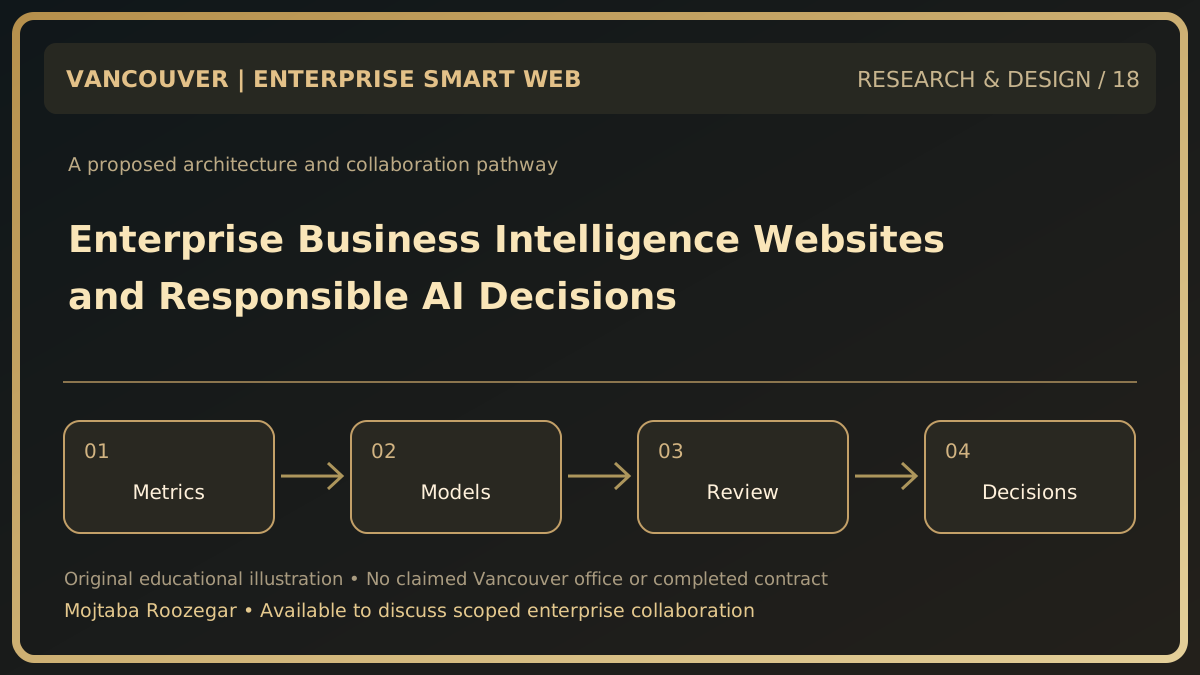
Vancouver Enterprise Smart Web — 20 Collaboration Articles

I am open to discussing smart industrial and commercial websites, enterprise portals, secure integration, AI and digital transformation with Vancouver organizations. Explore practical project ideas and potential collaboration paths.

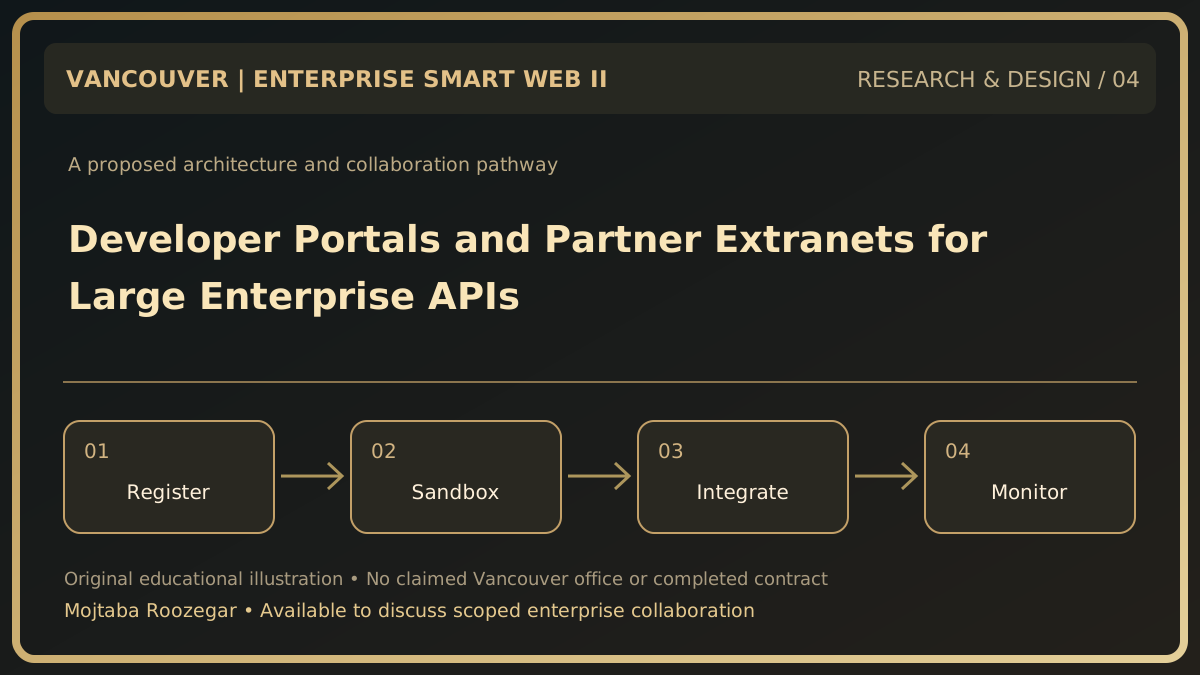
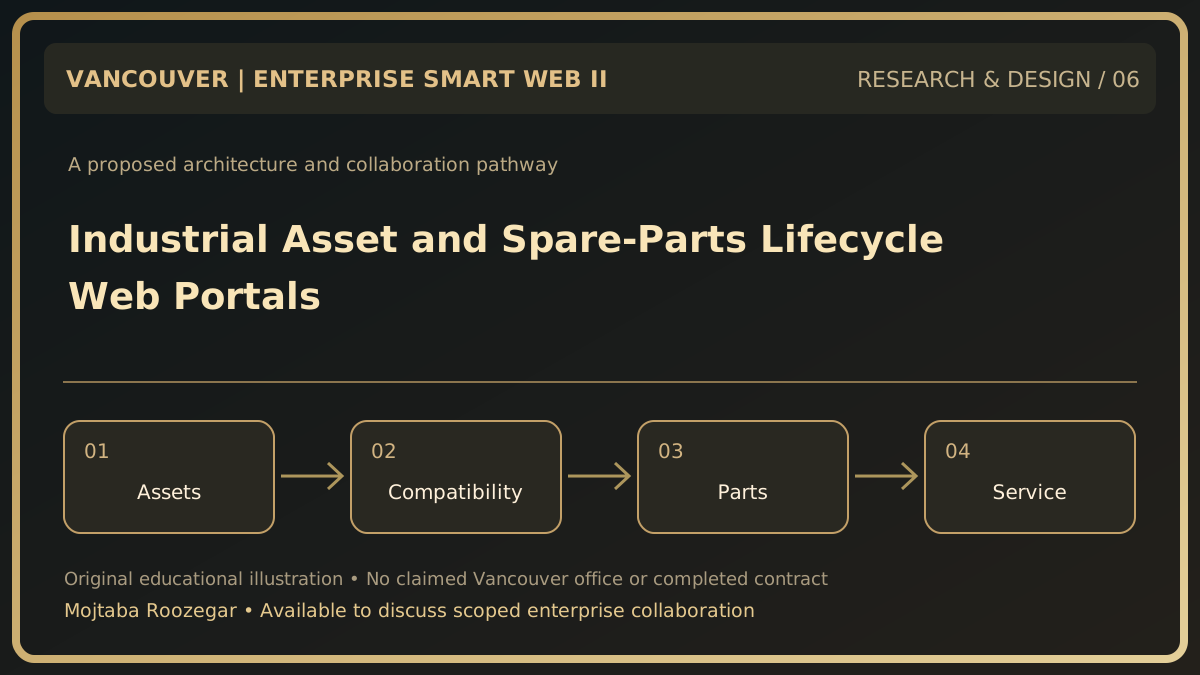
Vancouver Enterprise Smart Web — 20 More Specialized Collaboration Articles

I am open to discussing smart industrial and commercial websites, enterprise portals, secure integration, AI and digital transformation with Vancouver organizations. Explore practical project ideas and potential collaboration paths.

20 Photo Essays: Professional Profile and Smart Website Collaboration

Ten owner-supplied personal photographs and ten conceptual technology illustrations accompany twenty practical essays on evidence-led business websites, research, design, cybersecurity, AI and cooperation. Images are editorial, not documentation of completed Canadian contracts.

Explore the 20 photo essays by professional interest

Each article has its own accompanying portrait or original conceptual illustration. Choose a research, website-engineering, trust or Vancouver-oriented collaboration pathway below. Images accompany the research and professional topics.

Applied research and reliable evidence

Economics, evidence provenance, operational measurement and analytical decisions.

  1. From Livestock Field Evidence to Intelligent Economic Web Tools
  2. Farm Research, Personal Evidence and Reliable Digital Records
  3. Livestock Production Economics as a Smart Website Use Case
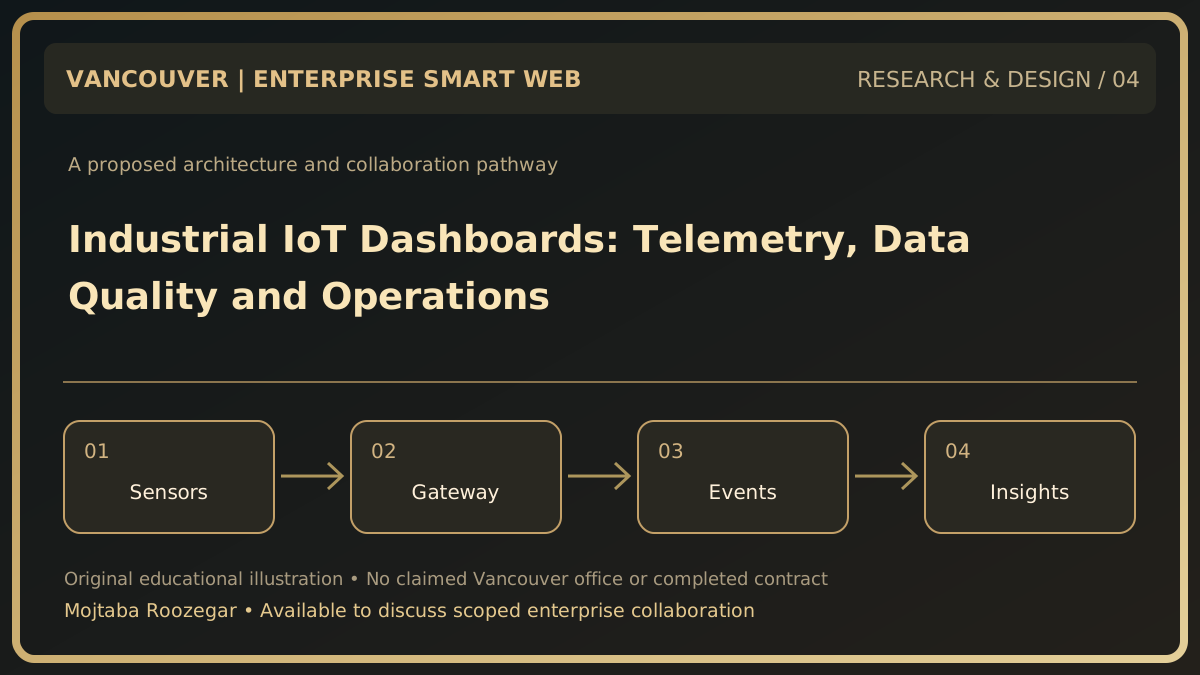
  4. Industrial Data Dashboards: Operational Truth Behind the Visuals
  5. Enterprise Website Analytics: Measurement Before Growth Claims

Designing useful enterprise websites

Real user tasks, accessible design, trustworthy transactions and robust releases.

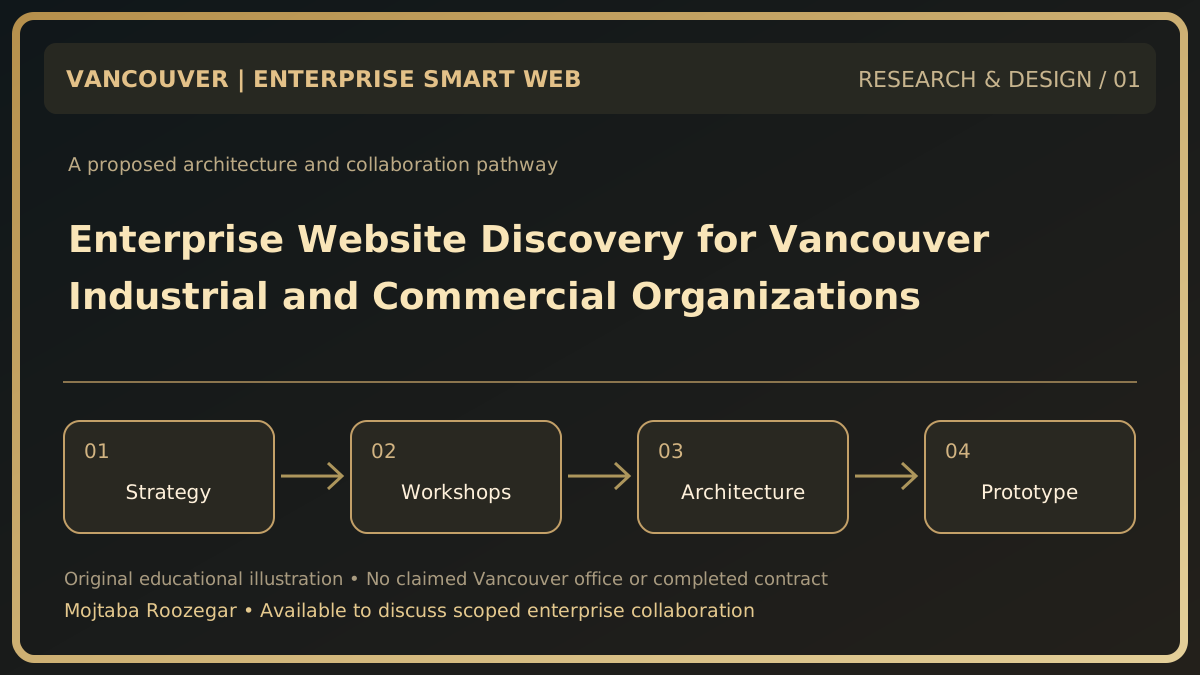
  1. Listening Before Coding: Enterprise Website Discovery
  2. From Everyday Observation to Smart Website Requirements
  3. Professional UI/UX Workshops for Complex Enterprise Web Portals
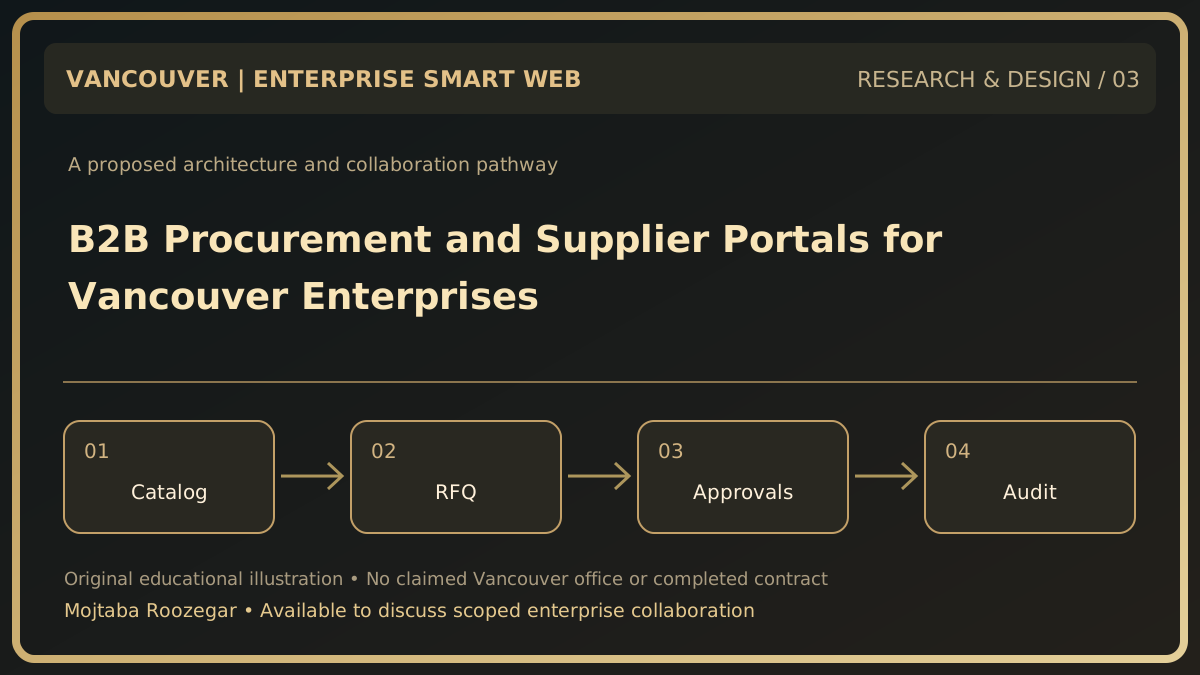
  4. Enterprise B2B Commerce: Trust, Orders and Authorization
  5. Cloud Hosting and Continuous Delivery for Reliable Enterprise Websites

Professional trust, secure AI and portfolios

Demonstrable expertise, responsible AI assistance and enterprise security.

  1. Executive Digital Presence Built on Verifiable Expertise
  2. Professional Branding Through Evidence, Not Appearance Alone
  3. Portfolio Storytelling for High-Trust Enterprise Web Partnerships
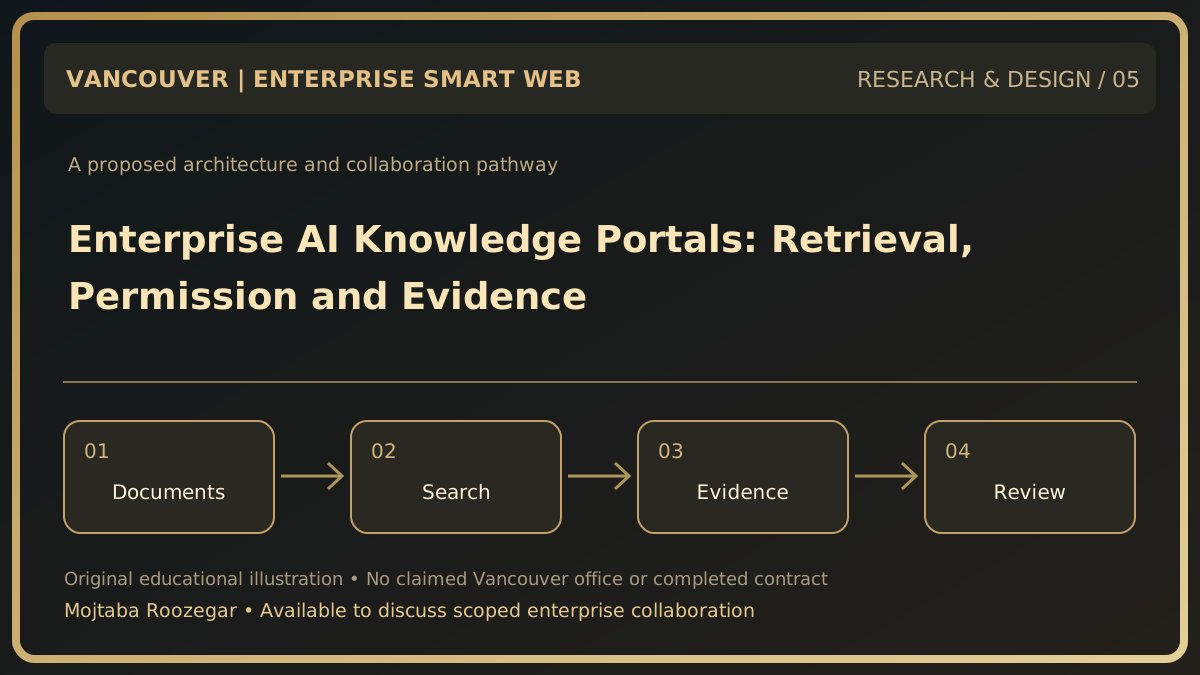
  4. AI-Powered Enterprise Websites: From Attractive Demo to Evidence-Based Tool
  5. Designing Enterprise Cybersecurity into Intelligent Websites

Vancouver-oriented collaboration

Scoping, communication, responsible location claims and remote project delivery.

  1. Thoughtful Leadership in Remote Enterprise Website Projects
  2. From a Professional Introduction to a Scoped Digital Collaboration
  3. Cross-Border Digital Teamwork Without Misleading Location Claims
  4. Building an Operating Model for International Digital Collaboration
  5. Remote Collaboration Across Time Zones: A Practical Enterprise Website Playbook

Interested in an enterprise website or applied-research discussion? Explore the professional profile and collaboration information. A conversation can begin with the project scope and business needs.

Open to technical discussion • Vancouver / international teams

Intelligent Enterprise Website Collaboration

I am open to discussing research-led, professional web development for industrial and commercial organizations, including teams based in Vancouver. Each proposal begins with project discovery, technical planning and measurable deliverables. Each engagement would require verified scope, technical ownership and applicable contracting arrangements.

Conceptual illustration of professionals reviewing an enterprise systems architecture
Intelligent Enterprise Website Design

PROPOSAL 01

Enterprise Web Discovery and Systems Architecture

For organizations considering a new customer, procurement or internal business portal.

Possible first deliverable: Stakeholder map, user-role and data-flow diagrams, risk register, prioritized backlog and a tested task prototype.

Read the relevant technical article
Conceptual illustration of an industrial warehouse supporting B2B trade
Intelligent Enterprise Website Design

PROPOSAL 02

Secure Multi-Organization B2B Portal

For suppliers, distributors and commercial teams with separate customers, prices or approvals.

Possible first deliverable: Tenant permission matrix, quotation or approval pilot, idempotent workflow tests and source-of-truth integration plan.

Read the relevant technical article
Conceptual illustration of engineers reading industrial monitoring dashboards
Intelligent Enterprise Website Design

PROPOSAL 03

Read-Only Industrial Information Dashboard

For manufacturers or facilities seeking understandable, authorized telemetry visibility.

Possible first deliverable: Measurement and freshness schema, synthetic dashboard, read-only integration boundary and disconnected-source tests.

Read the relevant technical article
Conceptual illustration of a research team exploring AI knowledge systems
Intelligent Enterprise Website Design

PROPOSAL 04

Source-Grounded Enterprise AI Knowledge Assistant

For teams exploring document search and evidence-backed internal answers.

Possible first deliverable: Approved-source retrieval pilot, passage citations, permission abuse cases and an evaluated question set.

Read the relevant technical article
Conceptual illustration of a user-experience designer preparing interface layouts
Intelligent Enterprise Website Design

PROPOSAL 05

Accessible User Experience and Website Assurance

For enterprises needing clearer critical workflows, appropriate WCAG practices and permission checks.

Possible first deliverable: One redesigned accessible journey, testable components, keyboard review, risk cases and a correction backlog.

Read the relevant technical article
Conceptual illustration of an engineer operating a data center
Intelligent Enterprise Website Design

PROPOSAL 06

Website Modernization, CI/CD and Resilience

For organizations improving existing websites while avoiding risky broad replacements.

Possible first deliverable: Dependency inventory, guarded release process, route-level checks, rollback rehearsal and phased migration proposal.

Read the relevant technical article

A careful four-step engagement path

  1. Initial inquiry: explain the organization, problem and preferred virtual contact.
  2. Discovery: review users, current systems, risk, delivery boundaries and available evidence.
  3. Scoped pilot: agree on deliverables, acceptance tests, cost and legal/technical prerequisites.
  4. Evaluation: review prototype evidence and decide whether to revise, stop or expand.

Do not send credentials, confidential records or personal documents in an introductory message. Availability, legal eligibility, paid terms and any on-site activity must be confirmed separately.

Send a collaboration inquiry through the existing contact form →

Five Perspectives on Intelligent Website Engineering

Explore five complementary technical ideas for intelligent commercial and industrial websites: discovery, modular architecture, analytical accuracy, resilient infrastructure and professional collaboration.

Professional portrait introducing research-led intelligent website strategy
Research-led digital strategy

Evidence-Driven Discovery for Intelligent Enterprise Websites

How stakeholder research, bounded architecture experiments and traceable requirements shape reliable enterprise web products.

Read the illustrated technical analysis →
Technical presenter explaining modular enterprise website architecture
Enterprise systems architecture

Modular Architecture for Modern Enterprise Web Platforms

A reproducible approach to service boundaries, data ownership and gradual modernization of large commercial sites.

Read the illustrated technical analysis →
Professional working through web design and enterprise data analytics
Analytics and research

Decision Intelligence and Measurement Design for Business Websites

Designing useful metrics and explainable dashboards without conflating traffic, conversions and commercial outcomes.

Read the illustrated technical analysis →
Professional in a server environment introducing reliable cloud engineering
Cloud engineering and security

Resilient Hosting, Secure Releases and Verifiable Website Reliability

A production engineering checklist for backups, deep-route testing, permission boundaries and reversible deployments.

Read the illustrated technical analysis →
Technology presenter exploring intelligent website project collaboration
Technical collaboration and delivery

Professional Collaboration Framework for Intelligent Web Projects

From executive presentation to a scoped pilot with accountable decisions, technical milestones and measurable acceptance.
Read the illustrated technical analysis →

For project discussions, the existing contact page is available. Each proposal is scoped to requirements and acceptance criteria.
FROM RESEARCH TO DELIVERY

Turn an expert article into a scoped technical pilot.

These journal studies explain decisions, constraints and verification. A professional pilot converts one validated requirement into a testable deployment without pretending a concept is already a client success.

01 / DISCOVERY

Problem & requirements

Stakeholder goals, accessibility, existing system interfaces, realistic scope and acceptance tests.

02 / BUILD

Secure technical pilot

Django architecture, performance budgets, traceable data flows, human-reviewed AI and QA.

03 / HANDOVER

Measured delivery

Usable documentation, source ownership, monitoring, rollback readiness and an explicit maintenance plan.

Discuss a scoped website project →

Professional collaboration is subject to agreed scope, verified capabilities, contractual terms and applicable legal requirements. No existing client partnership is implied.